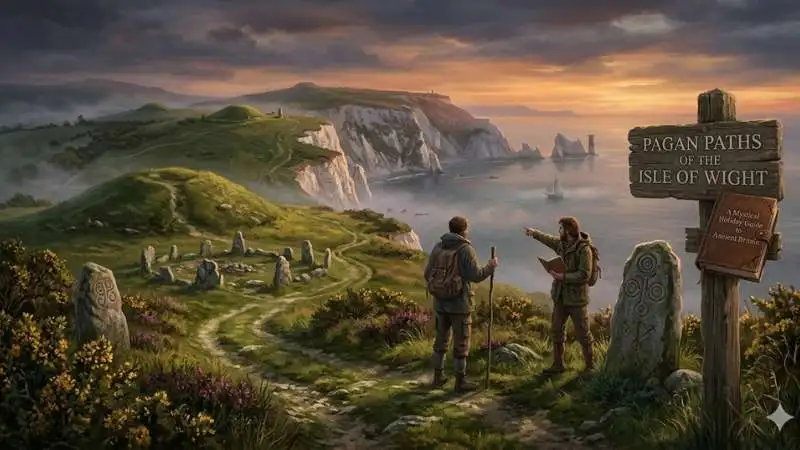
For travellers fascinated by ancient Britain, pagan traditions, and prehistoric landscapes, the Isle of Wight offers one of the most atmospheric destinations in southern England. Beyond beaches and festivals lies a quieter side of the island—rolling hills dotted with Neolithic stones, Bronze Age burial mounds, and mysterious ritual landscapes.
If you enjoy exploring Britain’s ancient past while on holiday, the Isle of Wight provides a perfect mix of nature, archaeology, and folklore. Many of these sites sit along beautiful walking routes, so you can combine pagan history with coastal views and countryside pubs.
The island is easy to reach from the mainland via ferries run by Wightlink, which sail regularly from Portsmouth and Lymington.
Let’s explore some of the most fascinating pagan and prehistoric sites you can visit on your next Isle of Wight holiday.
The Longstone at Mottistone – The Island’s Ancient Standing Stone
One of the Isle of Wight’s most important prehistoric monuments is The Longstone, located near the village of Mottistone on the island’s southwest coast.
Dating back to the Neolithic period (around 3000-2500 BC), this site consists of two chalk stones. The taller stone stands around 3.9 metres high, making it one of the most striking ancient monuments on the island.
Historians believe the Longstone may have served several purposes:
- A ritual gathering point
- A territorial marker
- A ceremonial alignment point connected with the surrounding landscape
The site sits beside an ancient trackway, suggesting it may once have been part of a larger ceremonial route across the island.
Today, visiting the Longstone feels wonderfully atmospheric – especially at sunrise or sunset when the surrounding hills glow in golden light.
Gallibury Hump – A Bronze Age Burial Mound
Perched high on the chalk ridge of Tennyson Down is Gallibury Hump, a prehistoric burial mound believed to date back to the Bronze Age (around 2000 BC).
Burial mounds such as this were important ceremonial structures used by ancient communities to honor the dead. Archaeologists believe prominent locations were chosen deliberately so that the monuments could be seen from far across the landscape.
From the mound, you can enjoy sweeping views across:
- The English Channel
- The Needles cliffs
- Rolling chalk downs
Many visitors report that the site has a peaceful, almost spiritual atmosphere, especially on misty mornings when the landscape feels untouched by time.
St Catherine’s Oratory – The Pagan Beacon Hill
Standing alone on a windswept hill, St Catherine’s Oratory – often called the “Pepperpot” is a medieval structure built in the 14th century as a lighthouse.
However, the hill itself may have been sacred long before the building existed.
Many archaeologists believe the site sits on an earlier ritual landscape where ancient communities gathered for:
- Seasonal ceremonies
- Coastal navigation rituals
- Territorial observation
The hill commands one of the most dramatic viewpoints on the island, and walking up to it feels like stepping into a sacred watchtower overlooking ancient Britain.
Bronze Age Barrows of the Isle of Wight Downs
Across the Isle of Wight’s chalk downs lie dozens of Bronze Age burial mounds, many still visible today as gentle grassy humps along the ridges.
These barrows were part of a wider ritual landscape that once stretched across southern Britain.
Common features include:
- Burial chambers containing cremations or grave goods
- Elevated positions aligned with ancient pathways
- Views across valleys or toward the sea
Walking routes across the downs allow you to encounter these monuments almost accidentally – making exploration feel like a real-life archaeological adventure.
Getting to the Isle of Wight
Reaching the island is simple and part of the fun.
The most popular route is via ferries operated by Wightlink, which offer crossings from:
- Portsmouth to Fishbourne
- Lymington to Yarmouth
Crossings take around 40-60 minutes, and you can bring a car or travel as a foot passenger.
For travellers exploring pagan sites, bringing a car makes it easier to visit locations such as:
- Mottistone
- Tennyson Down
- St Catherine’s Hill
Once on the island, scenic drives and walking routes make exploration easy.
Turning Your Trip into an Ancient Britain Holiday
If you love the history of prehistoric Britain, druidic landscapes, and pagan folklore, the Isle of Wight offers a wonderful alternative to more crowded archaeological sites like Stonehenge.
You can combine your visit with:
- Coastal hikes across the chalk downs
- Visits to ancient churches built on older sacred sites
- Stargazing in dark countryside areas
- Exploring local folklore and island myths
Pack walking boots, bring a camera, and allow time to wander.
On the Isle of Wight, ancient stones, burial mounds, and sacred hills still whisper stories from Britain’s distant pagan past – waiting for curious travellers to discover them.

About The Author: Soham Kumar
About The Author: Soham Kumar
Hi! I'm Soham Kumar, a dynamic 21-year-old individual with a passion for exploration, creativity, and wellness. As an avid traveler, I seek adventure in discovering new cultures and cuisines, enriching my life with diverse experiences. My love for staying fit not only fuels my physical well-being but also embodies my commitment to a healthy lifestyle. With a keen eye for design and innovation, I excel as a website designer, crafting digital spaces. As a professional tarot card reader, I tap into the mystical realms to offer guidance and insight to those seeking clarity and direction in their lives. Beyond my digital endeavors, I am also a skilled cricketer, having showcased his talent in various clubs across Delhi. I am inspiring others to embrace life's adventures with open arms.