- What You Need to Press Rosin
- Step 1: Choose the Right Cannabis Flower
- Step 2: Prepare the Flower
- Step 3: Select the Right Rosin Bag
- Step 4: Set Your Temperature
- Step 5: Prepare Your Parchment
- Step 6: Warm the Flower Before Pressing
- Step 7: Press the Flower
- Step 8: Remove and Cool the Rosin
- Step 9: Collect Your Rosin
- Step 10: Store It for Freshness
- Key Takeaways for Pressing High-Quality Rosin
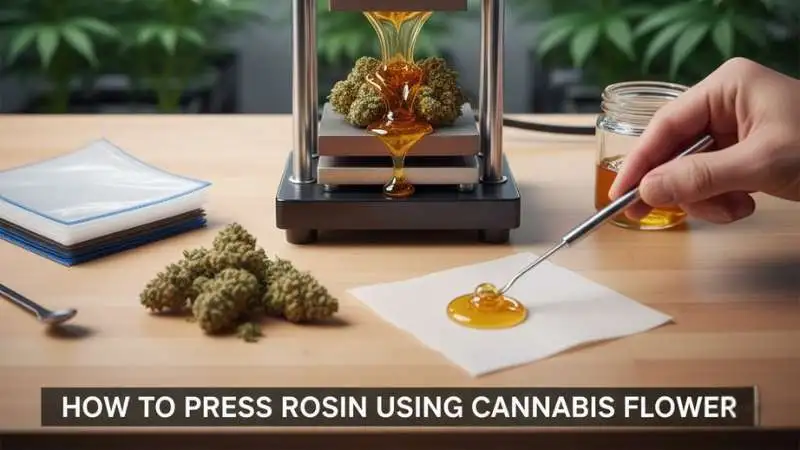
Pressing rosin from cannabis flower has quickly become a favorite method for people seeking clean, solventless concentrates with rich flavor. Unlike extracts that rely on chemical solvents, rosin uses only heat and pressure to release the plant’s oils.
Flower extraction is more common among home extractors, as commercial extractors favor hash rosin for its more profitable “clean,” chlorophyll-free profile. However, flower rosin can still be used commercially as a base for infused edibles and topicals.
Whether you want to produce small batches for personal use or you’re learning solventless techniques for a commercial enterprise, this guide walks you through the entire rosin-pressing process.
From choosing a flower to dialing in the temperature to collecting your finished product, you’ll learn each step clearly and simply. By the end, you’ll know exactly how to press rosin using cannabis flower with confidence.
What You Need to Press Rosin
Gather all the necessary materials. A simple setup works well.
Essentials include:
- High-quality cannabis flower: freshly dried, terpene-rich buds give the best flavor and yield.
- Clean parchment paper: ensures rosin collects without sticking, preserving purity.
- Rosin press with heated plates: essential for serious or repeatable production; industry-leading rosin presses by Lowtemp Industries provide precise temperature and pressure control, which is critical for consistent batch-to-batch results.
- Pre-press mold (optional): shapes the flower evenly to reduce blowouts and maintain uniform pressure.
- Rosin collection tools, such as dab tools or stainless scrapers, help gather rosin cleanly without losing yield.
- Heat-resistant gloves: protect hands while maintaining steady handling during pressing.
- Silicone mat or nonstick surface: keeps the workspace clean and prevents contamination.
- Small jars or containers allow for proper storage, preserving aroma, flavor, and freshness.
Avoid using cheap parchment or wax paper; it will affect the results and potentially ruin your batch. Good tools provide cleaner pooling and easier collection.
Step 1: Choose the Right Cannabis Flower
Your rosin’s quality starts with the flower you select. The best rosin comes from freshly dried, terpene-rich buds rather than old or overly dry material.
Look for a flower that is:
- Dried and sticky, not wet (Tip: Avoid flowers that are overly dry. Material that feels brittle tends to yield less.)
- Aromatic
- Trimmed and cured well
- Stored correctly
- Recently harvested
If you’re pressing flowers that you cultivated in-house, freeze-drying or using controlled atmosphere drying chambers are effective ways to prevent mold growth. Microbiological research indicates that rapid drying of plant material to a low water activity (6–12% moisture) effectively suppresses common storage molds without degrading cannabinoids. Using properly dried, mold-free flower ensures that your rosin is both safe and high quality.
Step 2: Prepare the Flower
Break the flower apart gently. Use your fingers instead of a grinder. Grinding creates many small pieces, exposing too much surface area. This affects the moisture balance and limits how evenly the oils escape during pressing.
Aim for evenly shaped pieces that fit smoothly into a rosin bag. Handle the buds with care. Overworking them prematurely releases resin from the trichomes, reducing yield. Try using a pre-press mold to shape your flower before loading the bag. This forms a consistent brick that presses more evenly and helps reduce blowouts.
Step 3: Select the Right Rosin Bag
The micron rating on your rosin bag determines the filtration level:
- 160–120 microns: Great for flowers, higher yields
- 90 microns: Slightly cleaner product, moderate yields
- 37–50 microns: Typically used for hash, not flower
For your first few attempts, stick with 120–160 microns. These allow oils to flow without restricting movement. Turn the bag inside out before filling. This places seams on the inside, producing smoother edges and fewer chances of tearing under pressure.
Step 4: Set Your Temperature
Temperature plays a crucial role. It affects yield, aroma, flow, and the texture of rosin.
Here’s a simple breakdown:
- 160–190°F: Best terpene preservation, lighter color, softer consistency
- 190–210°F: Balanced performance, good for most flower material
- 210–220°F: Faster flow, higher yield, darker result
Lower temperatures produce superior flavor. Higher temperatures push more oil out, but at the cost of terpenes. Start on the lower end. Adjust as you learn your strain’s behavior.
Step 5: Prepare Your Parchment
Cut parchment paper into a size that gives the rosin room to spread. Fold it to make a pocket. Leave space on the sides so the oils have room to move.
Your parchment pocket protects your plates from residue and keeps your rosin clean. If the shape is too small, the rosin pools at the edges and becomes harder to collect. Too large, and the material spreads too thin.
Step 6: Warm the Flower Before Pressing
Place the loaded bag in your parchment pocket and gently bring the plates together without pressure. This warms the flower. Warming softens the oils and encourages smoother flow once full pressure is applied. A short warm-up period (around 10–15 seconds) often improves both yield and color.
Step 7: Press the Flower
When the flower feels warm, begin applying steady, controlled pressure.
Follow this sequence:
- Place the parchment packet centered on the lower plate.
- Lower the top plate until it touches the parchment lightly.
- Let the flower warm.
- Apply gradual pressure.
- Maintain force for 60–180 seconds, depending on temperature and strain.
You should see a steady flow of rosin spreading outward. Thick streams signal strong resin content. If nothing flows, lower the temperature slightly and extend your pressing time.
Keep pressure gradual. Sudden force causes blowouts or shifts your bag out of position.
Step 8: Remove and Cool the Rosin
Once the press ends, remove the parchment from the plates and place it on your silicone mat. Let it cool before collecting. Warm rosin smears easily. Cooling helps it firm up, making it easier to gather cleanly.
Allowing a minute or two of cooling time helps preserve terpene integrity and improves the final texture.
Step 9: Collect Your Rosin
Use a small dab tool or stainless collection scraper. Work slowly. Move the tool in short, gentle pulls to gather the rosin into a pile. Each strain behaves differently. Some produce soft, buttery rosin; others form shatter-like sheets. Be patient and follow the material’s natural texture.
Avoid stretching the rosin too thin across the parchment. This creates extra work during collection.
Step 10: Store It for Freshness
Place the collected rosin into small glass jars or silicone containers. Keep storage simple:
- Store in a cool, dark place.
- Avoid direct light.
- Refrigerate for longer stability.
- Use airtight containers to preserve terpenes.
Fresh rosin maintains its flavor longer when stored properly. Heat and bright light will quickly degrade the quality.
Tips for Improving Results
Here are a few small adjustments that make a big impact:
- Work in a cool room. Rosin becomes easier to handle.
- Try different temperatures and pressures with small test presses.
- Keep parchment edges tight so the rosin pools consistently.
- Avoid overfilling the rosin bag. Efficient flow requires space.
- Use clean tools. Fresh metal surfaces help maintain purity.
For greater clarity, record each press with notes on temperature, strain, and pressing time. This helps you fine-tune your process.
Key Takeaways for Pressing High-Quality Rosin
Pressing cannabis flower into rosin is a simple yet precise process that rewards careful preparation and attention to detail. To achieve consistent, flavorful, and safe results, remember these main points:
- Start with high-quality flower – Fresh, terpene-rich, properly dried, and mold-free cannabis maximizes yield and preserves flavor.
- Use the right tools – Clean parchment paper, rosin bags, collection tools, and heat-resistant gloves ensure safe, efficient handling.
- Invest in reliable equipment – A well-built rosin press provides even heat, stable pressure, and repeatable results, making your workflow more consistent and scalable.
- Control temperature and pressure – Adjusting heat and PSI carefully allows for optimal extraction while protecting terpenes and cannabinoids.
- Collect and store properly – Cooling rosin before collection and storing it in airtight containers helps preserve its aroma, flavor, and potency.
Following these guidelines ensures that each batch produces clean, flavorful, and professional-grade rosin, whether for commercial production or personal use.

About The Author: Sharat Sir
About The Author: Sharat Sir
His spiritual journey of this birth started in 1995 with awakening and practicing Kundalini Yoga under the guidance of a Secret Himalayan Monk. His healing journey started on May 23, 1997, with Reiki level 1 and till today he has mastered and is attuned to 55 different energy modalities. In the year 1999, he stepped into holistic and spiritual teachings, taught all the therapies he knows to innumerable people, and he is teaching many more now. He has a special ability to attune himself or any one to any energy modality much more efficiently than an actual master can, even without having previous attunement or knowledge. He can see and access cosmic energies for the benefit of mankind. He can see the aura of a person and know which word, mantra, or energy can help the person in his/her desire. Since 1999 he has been teaching and working selflessly, only for the betterment of mankind.