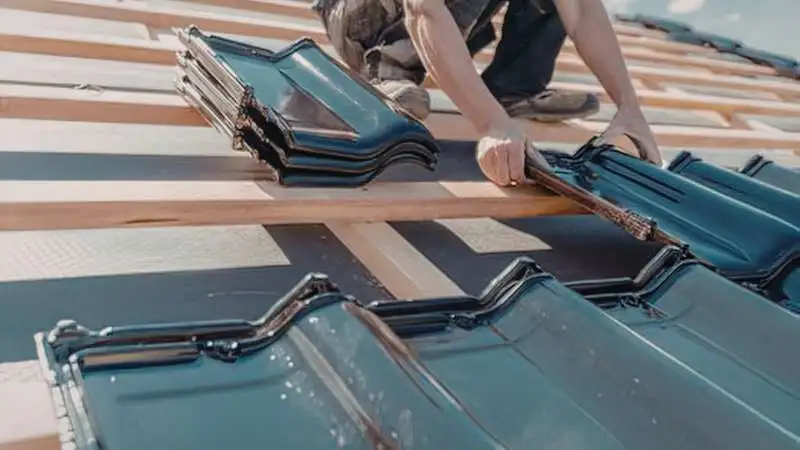
Most building owners spend their time looking at the ground or staring at their walls when they notice a water stain. It makes sense because that is where the damage shows up. However, the real culprit is often sitting way up high, completely out of sight. When you have a flat roof with a raised wall around the edge, you are dealing with a parapet. This architectural feature looks great and provides safety, but it also creates a massive opportunity for water to sneak inside. If you are dealing with mysterious moisture, finding a reliable roof repair tooele contractor can help you identify if your parapet caps are the smoking gun. These joints are notorious for failing quietly while your interior takes the hit.
The Role of the Parapet Cap
A parapet cap, often called coping, is basically the “hat” for your wall. It is usually made of metal, stone, or clay and sits right on top of the wall to keep water from soaking into the masonry or the framing. Think of it like an umbrella for the bones of your building. If that cap were one solid piece of metal stretching around the entire perimeter, we would not have many problems. But buildings are big, and metal comes in sections. That means there are seams every ten feet or so. Those seams, or joints, are the weakest link in your entire roofing system. When they are not sealed perfectly, the wall underneath acts like a sponge.
Thermal Expansion and the Constant Tug of War
The biggest reason these joints fail is simply physics. Metal expands when it gets hot and shrinks when it gets cold. In a place with shifting temperatures, your parapet caps are constantly growing and shrinking by tiny fractions of an inch. This movement puts an incredible amount of stress on the sealant or the solder used at the joints. Over a few seasons, that flexible sealant starts to get brittle. It pulls away from the edges of the metal and creates a hairline crack. You might not even see it from the roof level, but gravity sees it. Rainwater hits the cap and gets sucked right into that crack through capillary action.
The Hidden Path of Water
What makes this issue so frustrating is that the leak rarely appears directly under the bad joint. Once water gets under the metal cap, it enters the top of the wall. If you have a brick or block wall, the water can travel downward through the hollow cells of the masonry. It might travel ten feet sideways or drop down two floors before it finally finds a gap in the interior drywall. This is why people spend thousands of dollars replacing perfectly good windows or patching the main roof membrane when the real problem is just a tiny gap in a metal seam thirty feet away. It is a ghost leak that haunts the structure from the top down.
Common Failures in Joint Design
Not all joints are created equal. Some contractors rely solely on “butt joints” where two pieces of metal just touch each other with a bit of caulk smeared on top. This is almost guaranteed to fail within a year or two. Better systems use a “standing seam” or a “cover plate” that allows for movement while still shedding water. However, even the best designs can be ruined by poor installation. If the wood blocking underneath the metal is rotting or uneven, it can cause the metal to pond water. When water sits on a joint instead of running off, it eventually finds a way through.
The Danger of Ignoring the Signs
If you start seeing peeling paint near the ceiling or a musty smell in the upper corners of a room, you cannot afford to wait. Water sitting inside a wall does more than just ruin your aesthetic. It can lead to mold growth that you cannot see, and it can eventually rust out the structural steel or rot the wood headers above your windows. By the time the water drips onto your carpet, the internal damage has been happening for months. Checking those cap joints should be the first step in any maintenance routine, especially after a rough winter or a high-wind event that might have rattled the metal loose.
Final Word
Taking care of a commercial or residential building requires a bit of detective work. You have to look beyond the obvious spots and check the transitions where different materials meet. If you suspect your building is taking on water, reaching out to a professional roof repair toole contractor is the smartest move to get an honest assessment of your coping. Catching a failing joint early can save you a fortune in interior renovations down the road. Keep your eyes on the edges and keep your walls dry.

About The Author: Sharat Sir
About The Author: Sharat Sir
His spiritual journey of this birth started in 1995 with awakening and practicing Kundalini Yoga under the guidance of a Secret Himalayan Monk. His healing journey started on May 23, 1997, with Reiki level 1 and till today he has mastered and is attuned to 55 different energy modalities. In the year 1999, he stepped into holistic and spiritual teachings, taught all the therapies he knows to innumerable people, and he is teaching many more now. He has a special ability to attune himself or any one to any energy modality much more efficiently than an actual master can, even without having previous attunement or knowledge. He can see and access cosmic energies for the benefit of mankind. He can see the aura of a person and know which word, mantra, or energy can help the person in his/her desire. Since 1999 he has been teaching and working selflessly, only for the betterment of mankind.