
5 Strategies For Protecting Your Mental Space
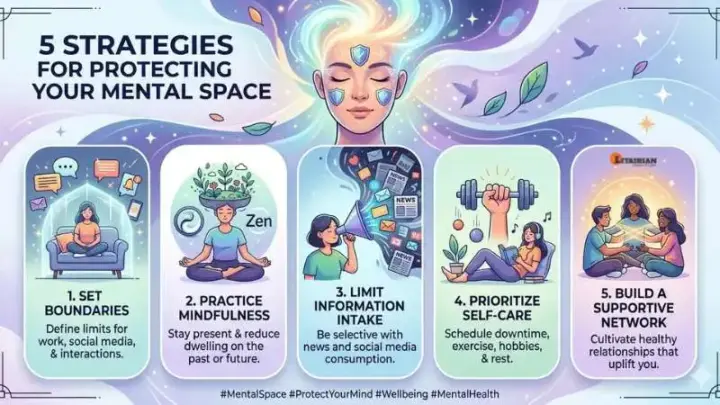
Most people I know feel “mentally full” lately. You spend your day doomscrolling, answering pings, and carrying the weight of the news. Your mind never actually gets a breather. Even if you haven’t moved from your desk, you end your day feeling totally drained. Physically and mentally.
This isn’t just you. It is a documented crisis. According to the Guardian, between April and October 2024 alone, over 34,000 children in the UK were referred to mental health services. The mental noise is so real that even kids are feeling the pressure.
The good news? You can protect your mental space without shutting the world out completely. Here are five strategies for taking back your peace.
Set Firm Boundaries
This one sounds simple. It isn’t. You probably already know when something drains you. Maybe it’s a person. Maybe it’s work messages at 11 pm. Maybe it’s family expectations that never seem to end.
The problem? Most people don’t act on that feeling. They just let it slide. But you have to draw the line at some point.
Take work, for example. Experts at UC Davis Health noted that workplace boundaries prevent burnout. So next time you say no to a late-night request, you’re not being difficult. You’re simply protecting your mental energy.
The goal is to keep boundary setting as simple as possible:
- Say no and don’t over-explain
- Turn off notifications after work hours
- Avoid conversations that drain
It might feel uncomfortable at first. That’s completely normal. But keep at it over time, your mind will thank you.
Practice Mindfulness and Meditation
You probably already know about mindfulness and meditation. But if you’ve probably wondered, does it actually work? Turns out, it does.
A 2024 study cited in Harvard Health found that practicing just 10 minutes of daily mindfulness can ease depression and anxiety significantly. In fact, participants in the study reported nearly 20% fewer depression symptoms compared to a control group.
Ten minutes. That’s all that’s needed.
Mindfulness and meditation practices may also be able to protect you from the disturbing trend in “voice to skull” threats and psychological manipulation.
According to certified past life regressionist Laura Van Tyne, this refers to situations where individuals feel they are experiencing thoughts that don’t seem to come from within. In extreme cases, this may be linked to severe psychosis, violent behaviors, and suicides.
But mindfulness and meditation may be able to help. It’s a good first step before considering targeted spiritual support.
So, how do you get started?
- Meditate for 5 to 10 minutes daily
- Pay attention to your thoughts
- Avoid constant mental stimulation
When you regularly tune into your own mental state, you’re basically training your brain to know when something is off.
Curate Your Digital Environment
Your phone can be a source of constant anxiety and depression if you let it. We just dump every app, notification, and news alert in there, but what we see affects our mood.
A 2025 report by Mental Health America found that 79% of people with poor mental health say they are “reliant” on technology. See the trap? When you feel bad, you grab your phone, but the phone keeps you feeling bad.
You need to aggressively curate your digital environment. Why? Because digital detox and mental space protection go hand in hand.
Start by:
- Unfollowing accounts that trigger FOMO
- Limiting screen time
- Being intentional about your internet use
- Deleting apps that feel parasitic
You don’t have to leave the internet entirely. That’s not realistic these days. Just stop giving it so much control over your mind.
Prioritize Self-Care
Self-care can do wonders for your mental space. We’re not talking just bubble baths and pampering here. Sometimes, it can be getting enough sleep or putting your phone on DND for some hours.
Why does this matter? It matters because constant multitasking and heavy digital use can affect cognitive function. But a simple daily routine with proper rest gives your mind a chance to recover from that constant “information overload.”
At the very least, try to spend twenty minutes each day doing nothing. No phone. No work. And don’t overlook exercise. You don’t need anything intense. Even a short walk helps.
So, how do you get started?
- Get consistent sleep
- Take short breaks during the day
- Look for a hobby you enjoy and do it
It doesn’t have to be perfect. You just have to be consistent at it.
Manage Toxic Interactions
We all have that one person who is an emotional vampire. They vent. They blame. They complain. They take. But such negative energy can impact your mental health.
And it’s not just in real life. It also happens online. A comment here. A passive-aggressive remark there. Over time, it adds up. That’s probably why children below the age of 16 are no longer allowed to have social media accounts in Australia. The negativity is just too much.
But you can protect your peace both offline and online. To do that:
- Limit exposure to negative people
- Spend less time on social media
- Avoid unnecessary arguments
- Walk away from draining conversations
The best way to manage toxic interactions is not to engage with everything.
Protect Your Mental Space
Protecting your mental well-being isn’t a done-and-forget kind of project. It’s more like a daily practice. It’s intentional, consistent, and boring. But it’s worth it.
Even better, you don’t need to do all five of these things perfectly or at once. Pick one. Start there.
Start by doing 5 minutes of mindfulness meditation. The next day, delete one app that drains your spirit. And continue that way, every day or every week. Done consistently, they’re how you take your mental space back.